
Used Dirt Bike Checklist
We may earn a commission from some links on this page.
A free used dirt bike checklist for the track or the seller's garage: what to check on the frame, engine, suspension, wheels and paperwork, then print it.
Tick each item you have checked. Ticks and notes save in this browser only.
0 of 46 checked
Checked by: ______________________________ Date: ____________________
VIN and paperwork
| Check | Done |
|---|---|
Frame and chassis
| Check | Done |
|---|---|
Engine and hour meter
| Check | Done |
|---|---|
Suspension and linkage
| Check | Done |
|---|---|
Wheels, tires and spokes
| Check | Done |
|---|---|
Brakes and controls
| Check | Done |
|---|---|
Air filter and chain
| Check | Done |
|---|---|
Start and test ride
| Check | Done |
|---|---|
This is a buyer's checklist, not a professional inspection. An unticked item is not checked, and it does not pass because it was left blank.
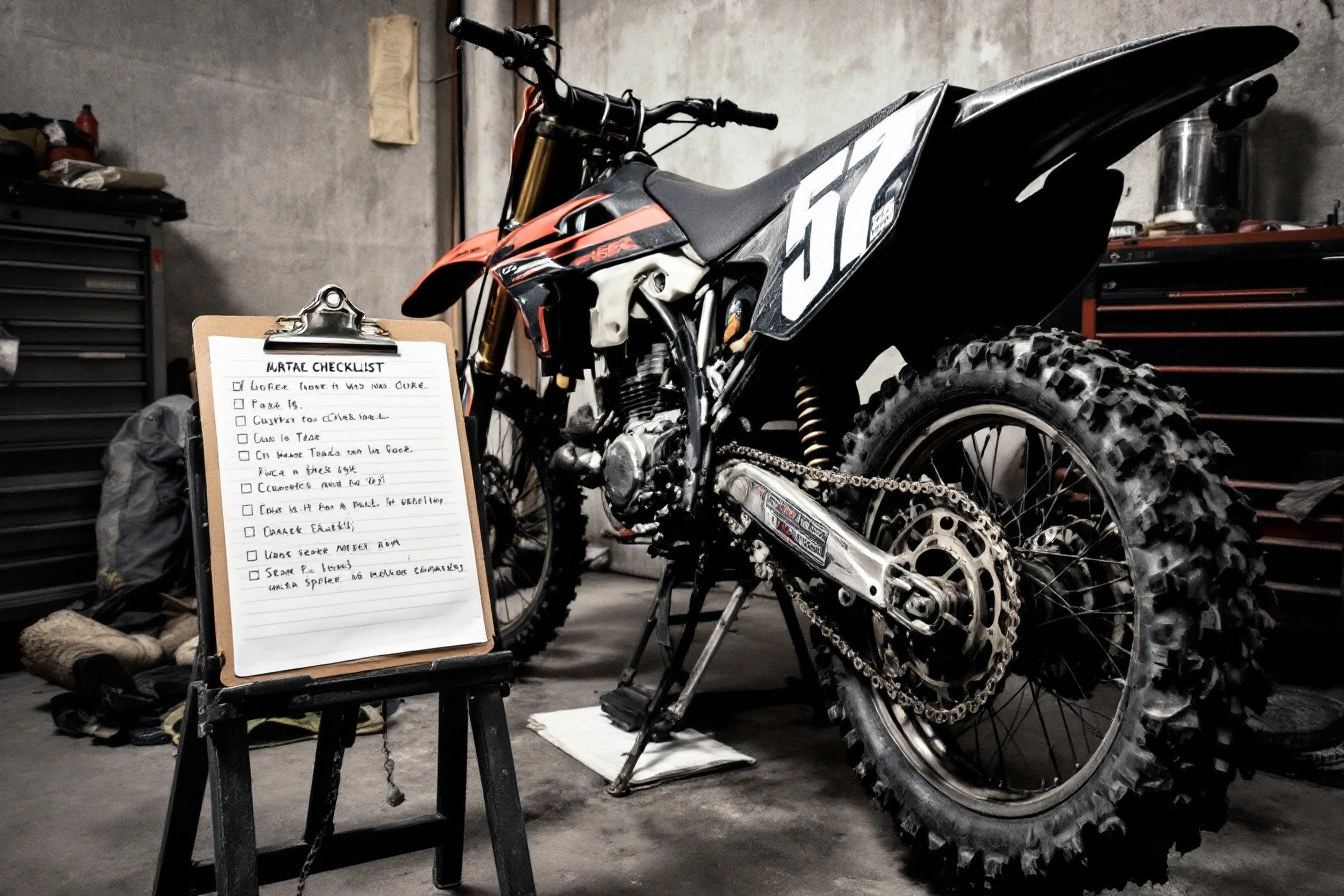
A used dirt bike checklist has to look at different things than a road bike list. Dirt bikes live in dust and mud, they get dropped, and many have no title or odometer. The list above starts with the frame VIN and works through the parts that fail first.
Use it at the seller's garage, at the track or at a trailhead. Tick what you check, write down what you cannot check, and print the page before you go. The printout is your record of what the seller showed you.
The short answer: check the frame VIN and engine number first, then the hour meter, air filter, linkage, spokes, brakes and chain. A dirt bike with a clean frame and a honest service record beats a shiny bike with a rebuilt story.
How to Use This Used Dirt Bike Checklist
The list runs from the frame outward. Tick only what you check, and write down what you cannot check.
Step 1: Match the VIN to the Paperwork
Find the VIN on the frame, usually at the steering head. Read it with a flashlight and compare it with the bill of sale. If the bike has a title or a registration, compare it there too.
Dirt bikes often have no title. That does not mean the bike is stolen, but it does mean the paperwork is thinner. Ask the seller where the bike came from and whether the state titles off-road bikes.
Record the engine number as well. The engine number is not the VIN, and it does not have to match the VIN. It is a second identifier that can show whether the engine was swapped.
Run the VIN before you pay. A history report may show a theft record or a salvage brand. A stolen dirt bike can be seized, and the buyer may lose both the bike and the money.
If the frame number is ground off or covered by a weld, walk away. A new frame is expensive, and a state may not issue a title for a frame with no number.
Frame and Chassis
Look at the steering head and the frame welds. Dirt bikes crack at the steering head, the engine mounts and the shock mount. A crack can hide under paint, so look for a rust line or a paint crack that follows a weld.
Check the subframe. A bike that has looped or landed hard can bend the subframe or crack it at the rear fender mount. A bent subframe can make the seat and side panels sit crooked.
Look at the swingarm. Check for cracks near the pivot and the chain adjuster. A swingarm that has been repaired by welding is a risk on a bike that will be jumped.
Check the footpeg mounts and the frame rails under the engine. A bike that has been ridden in rocks can have crushed rails. A bash plate hides some of this, so look under it.
Stand the bike on a stand and check that it sits level. A bike that leans to one side on a flat stand may have a bent frame or a mismatched shock.
Engine and Hour Meter
Read the hour meter. A trail bike may show a few hundred hours. A race bike may show fewer hours but much harder use. The meter is a starting point, not a verdict.
Ask whether the meter was fitted from new. A meter fitted last year tells you nothing about the years before it. Look at the general condition of the bike and compare it with the hours.
Start the engine from cold. Listen for a top-end rattle, a knock in the bottom end or a whistle. A two-stroke should start within a few kicks. A four-stroke should start without a long crank.
Check the oil. On a four-stroke, look at the sight glass or the dipstick. Black oil is normal. Milky oil can mean water in the engine. A metallic sheen can mean a bearing is failing.
Look for oil at the case covers, the countershaft seal and the cylinder base. A dirt bike gets dirty, so wipe the area with a rag and look again after the engine runs.
Check the coolant on a liquid-cooled bike. Look at the radiator fins and the hoses. A bent radiator can still work, but a leaking one will cost you. Do not open a hot cap.
Ask when the top end was last done. A two-stroke top end is a normal service item. A four-stroke valve check is also normal. A seller who does not know is not automatically hiding something, but price the work.
Suspension and Linkage
Check the fork tubes for scratches, dents and oil rings. A scratch on the tube can tear a seal. A dent can make the fork stick. Oil on the dust seal is a leak.
Press the forks down and let them return. They should move smoothly and return without a bounce. A fork that sticks or tops out hard may need a service or a repair.
Check the rear shock for oil at the shaft and the reservoir. Look at the spring for rust and the adjusters for damage. A shock that has lost its gas may feel soft and bouncy.
Grab the rear wheel and lift it. Feel for play in the linkage and the swingarm bearings. A small amount of play can be normal. A click or visible movement is a rebuild.
Look at the linkage bearings and seals. A bike that has been pressure-washed can have water in the linkage. Grease that looks like coffee is a sign of neglect.
Check the sag adjuster and the clickers. A seized adjuster is common on an older bike. It is not a deal breaker, but it is a repair.
Wheels, Tires and Spokes
Spin each wheel and watch the rim. A hop or a wobble can mean a bent rim or a badly laced wheel. A small wobble can be trued. A flat spot may need a new rim.
Check the rim for dents and cracks. Dirt bike rims take hits. A dent at the bead can cause a leak or a tire that will not seat.
Press each spoke and listen for a loose one. A loose spoke can be tightened. Several loose spokes on one side can mean the wheel was built wrong or hit hard.
Read the DOT date code on both tires. A knobby tire can look good and still be old and hard. Check the knobs for rounding, tears and missing chunks.
Check the rim lock and the valve stem. A missing rim lock can let the tire spin on the rim. A cracked valve stem is a slow leak.
Check the wheel bearings by rocking the wheel side to side. A wheel with play needs bearings. This is a common maintenance item on a dirt bike.
Brakes and Controls
Check the brake pads and the discs. A dirt bike's front brake does most of the work. A worn pad or a scored disc is a replacement.
Feel both levers. A firm lever is good. A spongy lever may need fluid or a bleed. A lever that pulls to the bar is a problem.
Check the brake lines for cracks and leaks. A line that has been routed badly can rub on the fork or the frame. Look at the banjo fittings for weeping.
Check the throttle for a free return. Turn the bars from lock to lock and listen for a cable that pulls. A throttle that hangs open is dangerous on any bike.
Check the clutch for drag. With the engine off, pull the lever and push the bike in gear. A bike that will not roll with the lever pulled may have a dragging clutch.
Check the handlebar, grips and levers for bends. A bent bar can be hard to see. A grip that spins on the bar is a small fix but a sign of wear.
Air Filter and Chain
Open the airbox and look at the filter. A clean, oiled filter is a good sign. A filter that is dirty on the inside means dirt has been getting into the engine.
Check the filter seal. A filter that does not seal at the base lets dust past. Look for dust in the airboot.
Check the chain for tight spots and rust. A dirt bike chain lives in grit, so a rusty chain is common. A chain with tight spots will wear the sprockets fast.
Check the sprocket teeth for hooks and wear. A hooked sprocket and a worn chain should be replaced as a set.
Check the chain guide and the slider. A worn guide can let the chain rub the swingarm. A missing slider can damage the swingarm.
Set the chain slack to the owner's manual figure. A seller who cannot find the manual is not a reason to skip the check, but it is a reason to look up the figure yourself.
Two-Stroke or Four-Stroke
A two-stroke and a four-stroke ask for different checks. A two-stroke has no oil sump to check in the same way, and it needs a mix or an oil pump. A four-stroke has engine oil, a filter and valves.
On a two-stroke, ask about the top end, the piston and the compression. A fresh top end is a plus if the seller has receipts. A rebuilt bottom end is a bigger repair and a bigger question.
On a four-stroke, check the oil and the valve clearance history. A four-stroke that is hard to start when cold can have tight valves. A four-stroke with a noisy top end can have a worn cam chain.
The exhaust note is different too. A two-stroke has a sharp ring. A four-stroke has a lower note. A knock or a rattle over either note is a reason to look closer.
Before the Viewing
Ask for the VIN and the engine number before you go. A photo of each is enough to start a history check. A seller who will not send them is a seller who does not want a check.
Ask how the bike is stored. A bike kept in a garage is different from a bike kept under a tarp in the yard. Rust, sun damage and water in the frame come from storage.
Bring a flashlight, a rag, a spoke wrench and the printed list. A spoke wrench is small and tells you in seconds whether the wheels are tight. A rag wipes the fork tubes and the engine cases.
Wear clothes you can kneel in. A dirt bike check happens on the ground, not in a showroom. A seller who will not let you get close is a seller to leave.
Reading the Seller
Ask how the bike was ridden. Trail, track, dunes and road are different lives for the same machine. A bike that was raced has a harder history than a bike that was trail ridden.
Ask who did the work. A seller with receipts from a shop is easier to trust than a seller who did everything himself and remembers none of it. Neither is proof, but the paperwork helps.
Ask why the bike is for sale. A racer moving up a class, a rider who switched to a four-stroke, a parent whose child outgrew the bike: these are normal reasons. A vague answer is a question mark.
Ask for the spare parts. Jets, sprockets, a spare air filter and a set of plastics are worth money. A seller who kept the spares probably cared for the bike.
When to Walk Away
Walk away if the frame number is gone. Walk away if the frame is cracked or the swingarm is welded. A frame repair on a dirt bike is a specialist job, and the bike may never be straight.
Walk away if the engine will not start from cold or makes a hard metallic noise. A top end is one thing. A bottom end or a transmission is a bigger bill.
Walk away if the linkage has play you can feel through the rear wheel. A linkage rebuild is normal maintenance, but it is also a sign of neglect in other places.
Walk away if the seller will not let you check the VIN or the hour meter. A seller who hides the identifiers is hiding something.
After You Buy
Clean the air filter before the first ride. A dirty filter pushes grit into the engine. Check the oil, the chain and the tire pressure at the same time.
Grease the linkage and the steering head if the seller did not. A dirt bike sees water and grit, and those bearings are the first to suffer. A grease gun and an hour of work save a rebuild.
Write down the hour meter reading on the day you buy. That gives you a service baseline. Change the oil on the schedule for your model, not on a guess.
Check your state's rules for off-road registration. A bill of sale may be all you need, or the state may want a title or a permit. Do it before you ride on public land.
If You Cannot Ride It
A dirt bike may have no place to ride at the seller's home. You can still start it, run it on a stand and check the controls. A stand test is not a trail test, but it finds the obvious faults.
Put the bike on a stand with the rear wheel off the ground. Start it cold and run it through the gears. Listen for a false neutral, a whine or a jump out of gear. A gearbox that will not stay engaged is a repair.
Check the clutch and the throttle with the engine running. A clutch that drags will make the bike creep in gear. A throttle that hangs is dangerous even on a stand.
Look at the chain line while the wheel turns. A chain that jumps or a sprocket that wobbles is a problem. Turn the wheel by hand and watch the sprocket and the chain guide.
Ask for a compression reading if the seller has a gauge. A two-stroke should hold pressure, and a four-stroke should meet the maker's figure. A low reading is a top-end question.
Buying for a Child
A child's dirt bike should fit the rider now. A bike that is too tall or too heavy is hard to start and hard to pick up. A smaller bike that starts easily and touches the ground is safer.
Use the seat height table on the dirt bike size chart to compare models. Then sit the child on the bike with boots on. A bike that fits in the showroom may feel different on a slope.
Check the start system. A small child may not have the strength for a kick start. An electric start or a bike with an automatic clutch is easier for a beginner.
Buy the safety gear with the bike. A helmet, goggles, boots, gloves and a chest protector are part of the cost. A child on a bike without gear is not ready to ride.
Checking a Two-Stroke Top End
A two-stroke top end is a wear item. The piston rings wear, the piston skirts scuff and the cylinder can lose its crosshatch. A seller who has receipts for a recent top end is easier to trust.
Ask what was replaced. A piston and rings is a normal service. A cylinder replate or a new cylinder is a bigger job. A receipt that names the parts and the work is better than a story.
Listen for a cold rattle that fades when the engine warms. A piston slap can be quiet when hot. A compression gauge gives a number, but the maker's figure is the one to compare.
Look at the spark plug. A plug that is black and wet may be jetted rich or burning oil. A plug that is white or blistered may be running lean. Neither is proof, but both are clues.
Check the exhaust for spooge. A two-stroke that drips black oil from the silencer may be jetted rich or may have a worn top end. A clean pipe with a fresh plug is a better sign.
Checking a Four-Stroke Top End
A four-stroke top end is more complex. Valves, cam chain, timing and oil changes all matter. A bike with a noisy cam chain or a hard cold start may need valve work.
Ask when the valves were checked. A valve check is a normal service item on a motocross four-stroke. A seller who does not know the interval is a seller with unknown service.
Listen for a tick at idle. A light tick can be a valve clearance. A heavy tick can be a cam chain or a bearing. A knock under load is more serious.
Check the oil for metal. A magnetic drain plug with fuzz is normal. A plug with flakes or a silver sheen is a sign of a failing bearing.
Look at the oil filter and the air filter. A clean filter and a fresh oil change are the cheapest signs of care. A dirty filter on a four-stroke is a risk to the valves.
Checks You Can Make Without Tools
A dirt bike is built to be worked on at the track, and many checks need no tools. Your eyes and hands find the worn parts before a gauge does.
Lift the bike off the stand and let it settle. A bike that bounces more than once may have a shock problem. A bike that sits low may have a broken spring or a bent linkage.
Rock the wheels. A wheel with side play needs bearings. A wheel that wobbles needs truing. A spoke that moves when you press it is loose.
Pull the brake lever and watch the caliper. A piston that does not move may be seized. A lever that feels soft may have air in the line.
Turn the bars slowly and listen. A crunch or a click from the steering head can be a dry bearing. A cable that pulls tight can make the throttle hang.
Look at the chain adjuster marks. A bike with the adjusters at the end of their range may need a new chain. A bike with one side forward and one back has a misaligned wheel.
Smell the fuel. Old fuel smells stale and varnishy. A bike that has sat with old fuel may need the carburetor cleaned before it runs right.
Check the airbox for dust trails. Dust that has passed the filter leaves a track in the boot. A clean boot and an oiled filter are a good sign.
Check the radiator hoses and the water pump. A hose that is hard or cracked is a leak waiting to happen. A water pump seal that weeps leaves a stain under the engine.
Look at the frame under the engine. A bike that has been bottomed hard can have a dented frame rail or a crushed bash plate. A bash plate hides the damage, so look under it.
What a Shop Inspection Covers
A shop can check compression, valve clearance, frame straightness and suspension. Those are the checks a buyer cannot do in a driveway without tools and practice.
Ask for a leak-down test on a four-stroke. It shows whether the valves and rings hold pressure. A compression test alone can miss a valve problem.
Ask the shop to check the frame and the steering head. A straight frame is the base for everything else. A bent frame is hard to fix and easy to hide.
Ask for a written list of what is worn. A list with measurements helps you price the bike. A verbal answer is easy to forget.
Negotiating After the Inspection
A dirt bike with a worn top end, a tired chain and a leaking fork is a project. Price the project, not the dream. A shop quote turns a vague worry into a number.
Ask the seller to fix a safety item or lower the price. A brake line, a wheel bearing or a cracked frame is not a haggle point. It is a reason to walk if the seller will not deal.
Write the agreement on the bill of sale. "Price includes a new chain and sprocket set" is clear. A handshake is not.
Leave the bike if the seller will not let you inspect it. A dirt bike is a machine, and a seller who hides the machine is hiding something.
Print View
The print button prints the full dirt list with the groups, your ticks and your written marks. The limitation line stays on the page: a buyer's checklist is not a professional inspection.
Print the list before you leave the house. A phone can die, a signal can drop and a seller can rush you. Paper does not need a battery.
If you are buying for a child, print the size chart as well. Seat height and weight matter as much as the mechanical checks. A bike that is too tall is a bike that sits in the garage.
Used Dirt Bike Checklist Verdict
A used dirt bike checklist should slow you down at the frame, the engine and the suspension. Those are the parts that cost the most to fix. A clean frame VIN, a straight chassis, a healthy engine and a linkage without play are worth more than fresh graphics. Use the list, print it, and check the VIN before you hand over cash. The right bike is the one that passes the boring checks.
Frequently Asked Questions
What is the first thing to check on a used dirt bike?
The frame VIN. Compare it with the bill of sale, the title if there is one, and the engine number. A dirt bike with a damaged or mismatched frame number is hard to register and hard to sell later, whatever the price.
How many hours is too many on a dirt bike?
There is no single number. A trail bike used gently can last far longer than a race bike with fewer hours. Look at the service records, the air filter, the oil and the chain. A seller who knows the hours but not the service history is telling you something.
Should I buy a dirt bike with no title?
Ask your state first. Some states do not title off-road bikes, and some do. A bill of sale plus a VIN check is the minimum. If the state requires a title and the seller has none, the bike may be hard to register or resell.
How do I check the suspension in a driveway?
Push the forks and the rear shock and watch how they return. Look for oil at the seals and scratches on the fork tubes. Lift the rear wheel to feel for linkage play. A full suspension service needs a shop, but the driveway check finds the obvious faults.
Can I test ride a dirt bike before buying?
Ask. A short ride on private land or a trail you know shows more than idling in a garage. If a ride is not possible, ask the seller to start it cold and run it through the gears on a stand. A refusal is information.