
Dirt Bike VIN Check
We may earn a commission from some links on this page.
Check a dirt bike VIN in one box: see where the frame and engine numbers sit, what the digits mean, and what a full history report adds before you buy.
| Frame VIN | Stamped on the steering head. |
|---|---|
| Engine number | Stamped on a flat pad on the engine cases. |
| Which one a report needs | The frame VIN. An engine number will not run a history report. |
| Pre-1981 bikes | Shorter frame numbers, not 17-character VINs. |
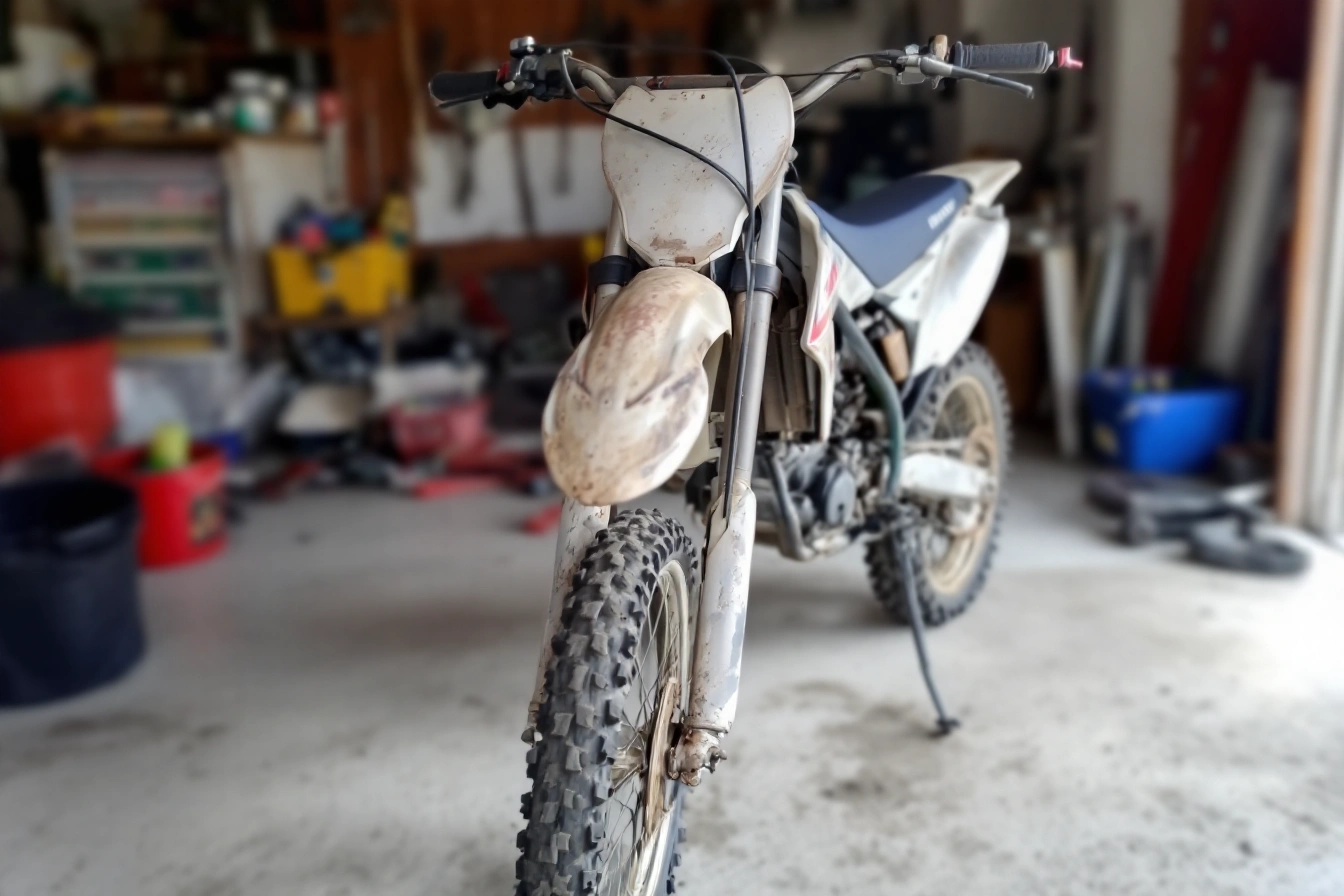
A dirt bike VIN check starts with one number: the frame VIN stamped at the steering head. Many dirt bikes have no plate, and many sellers hand over an engine number instead. That number will not run a history report. The frame VIN is the one the report needs, and it is the one to copy before you pay.
The frame VIN at the steering head is the number a report uses. The engine number is a separate serial and will not return a history. Copy the frame stamp, count 17 characters, and run that number.
Where the VIN Is on a Dirt Bike
Park the bike and turn the bars to the side. Look at the steering head, the short tube where the fork passes through the frame. Most dirt bikes have the VIN stamped into the metal at that tube. Turn the bars so you can see both faces of the tube, because the stamp may not be on the face you check first. A flashlight held at a low angle helps a shallow stamp show up.
Some bikes also carry a small plate riveted near the headstock. If the plate is there, read it and then check the frame stamp as well. The two should match. A plate that is loose or scratched should make you look harder at the frame.
Dirt bikes differ from road bikes here. A faired road bike hides the frame neck behind plastic, and a cruiser may use a label on the frame neck. A dirt bike is usually bare, which makes the stamp easy to find but also easy to wear down. Clean the area with a rag before you try to read it.
Frame Number vs Engine Number
The engine number sits on the cases, often on a raised pad near the front sprocket or on the clutch cover side. It is a real number and it matters for parts, but it is not the VIN. A report cannot run on it. Sellers sometimes confuse the two, and some use the engine number to avoid showing the frame.
| Number | Where it is | What it identifies | Used by a report |
|---|---|---|---|
| Frame VIN | Steering head, stamped into the frame | The whole bike | Yes |
| Engine number | Flat pad on the engine cases | The engine unit | No |
Scroll for more →
If the frame VIN and the engine number differ, that is normal. Engines get replaced. If the frame VIN is missing and the seller offers only the engine number, stop. Ask why.
What a Dirt Bike VIN Check Shows for Free
The free step is a decode. It reads the 17 characters and returns the model year, the make and often the model or model family. That helps you confirm the bike is what the seller says it is. It does not show title brands, theft, salvage or odometer records.
The decode also shows whether the VIN is well formed. A VIN never uses the letters I, O or Q, because they look like 1 and 0. If the seller's number contains one of those letters, it is not a valid 17-character VIN. The check digit in position 9 catches many typos and some cloned numbers.
A decode is a good first filter. It takes a minute and costs nothing. Use it to confirm the bike's identity, then decide whether the records matter enough to pay for a report.
What the History Report Adds
A paid history report is the records step. It can show a title brand such as salvage or rebuilt, a reported theft, insurance totals, odometer readings over time and liens. Each record type appears only where a source has reported it. A blank section means the record was not found, not that the event never happened.
For a dirt bike, the report matters most when the bike has been titled for the road or used for racing. A pure off-road bike may have a thin record because it never had a plate. That is not proof of a problem, but it limits what any report can tell you.
The report runs on the frame VIN. Copy the 17 characters as they appear, then run the number. Do not retype from memory, and do not let a seller read it to you. Photograph the stamp so you can check each character later.
Red Flags on a Used Dirt Bike
A few problems show up often enough to check every time. None of them proves theft on its own, but each one deserves a question before money changes hands.
| Signal | What it may mean | What to do |
|---|---|---|
| Frame VIN ground off or unreadable | The identity cannot be checked | Walk away unless lawful paperwork explains it |
| VIN plate loose or missing | The bike may have been repaired or stripped | Compare the frame stamp and the title |
| Engine number only, no frame VIN | The seller may not know the difference, or is avoiding the frame | Find the frame stamp before you continue |
| VIN and title do not match | A paperwork error or a swapped frame | Do not pay until the mismatch is explained |
| Fresh paint over the headstock | A repair, or a hidden stamp | Ask for photos before the paint and check the stamp |
Scroll for more →
Related VIN Guides
The frame number is only part of the check. How to read a motorcycle VIN walks the 17 positions, and where is the VIN on a motorcycle covers road bikes and faired models. If the bike is old, read old motorcycle VIN check first, because pre-1981 numbers do not follow the 17-character rule. When you are ready to see records, motorcycle VIN check explains what a report can and cannot show.
Dirt Bike VIN Check Verdict
A dirt bike VIN check comes down to the frame number. Run the frame VIN, not the engine number. A free decode confirms the year, make and model, and a paid history report adds the records that a decode cannot. Check the frame stamp in person, match it to the paperwork, and treat a missing or altered number as a reason to walk away.
Frequently Asked Questions
My dirt bike has no VIN plate. Is that normal?
Yes. Many dirt bikes never had a plate. The frame is stamped at the steering head, and that stamp is the VIN you use.
Is the engine number the same as the VIN?
No. The engine number identifies the engine, not the whole bike. A history report needs the frame VIN.
Can a free check tell me if the bike is stolen?
A free decode only names the year, make and model. Theft records come from a paid history report, and only where a record exists.
Should I buy a bike with a ground-off VIN?
No. A missing or ground-off frame number is a serious red flag. Walk away unless the seller can show a lawful explanation and paperwork.