
Used Motorcycle Checklist
We may earn a commission from some links on this page.
Use a free used motorcycle checklist before you buy: frame, VIN and title, engine, chain, tires and brakes, then print it and take it to the viewing.
Tick each item you have checked. Ticks and notes save in this browser only.
0 of 39 checked
Checked by: ______________________________ Date: ____________________
VIN and title
| Check | Done |
|---|---|
Frame and chassis
| Check | Done |
|---|---|
Engine and exhaust
| Check | Done |
|---|---|
Chain, sprockets and tires
| Check | Done |
|---|---|
Brakes and suspension
| Check | Done |
|---|---|
Electrics and controls
| Check | Done |
|---|---|
Paperwork and test ride
| Check | Done |
|---|---|
This is a buyer's checklist, not a professional inspection. An unticked item is not checked, and it does not pass because it was left blank.
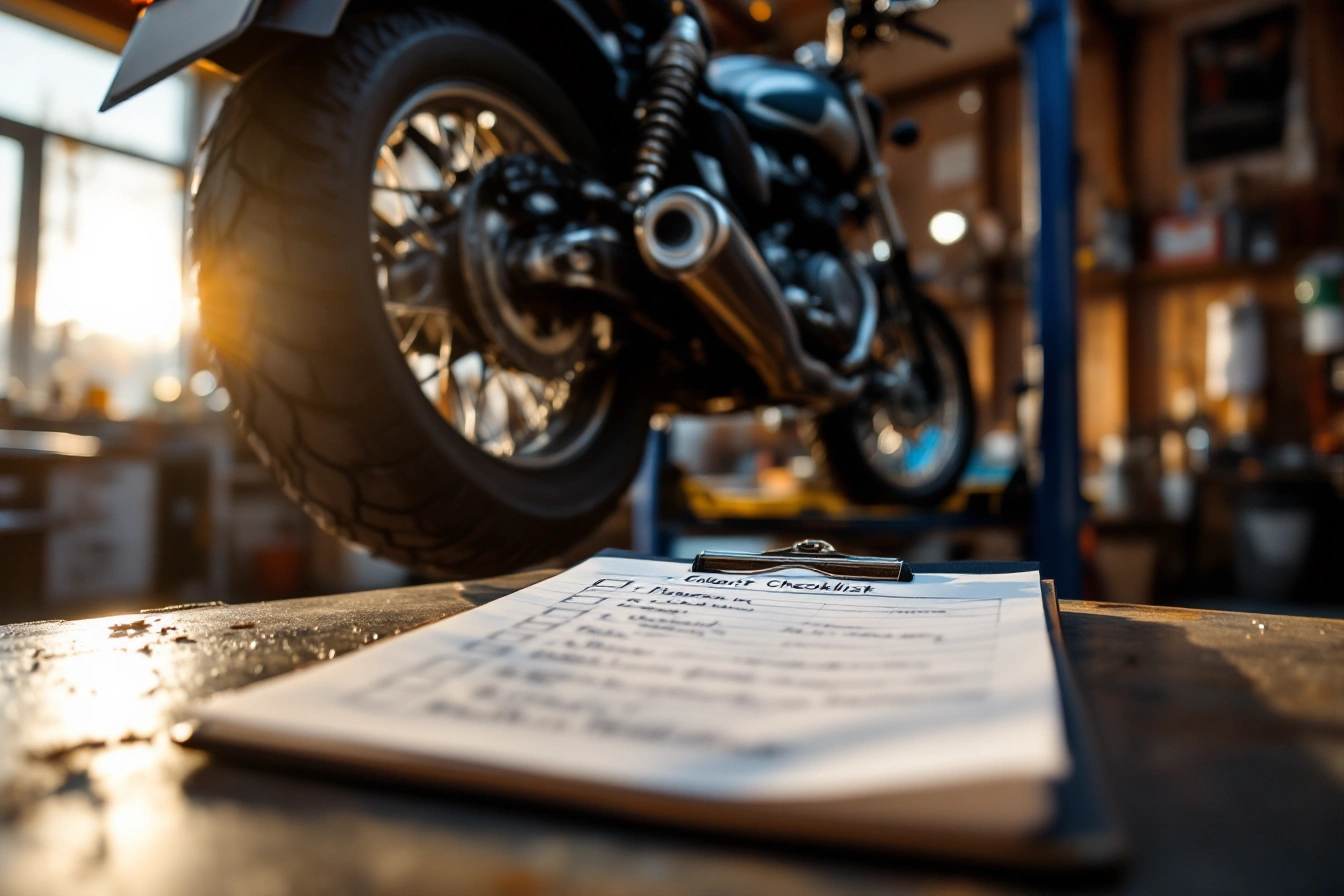
A used motorcycle checklist keeps you from falling for a clean tank and a warm engine. This one runs in order, starts with the VIN, and prints for the viewing. Tick each item you check, write a note where something looks wrong, and take the printed page with you.
The list is built for a private sale. A dealer has its own paperwork and may not let you pull panels in the showroom. A private seller usually will, and that is when the checklist earns its place.
The short answer: match the VIN to the title first, then check the frame, engine, chain, tires, brakes, suspension, electrics and paperwork. Print the list, tick only what you checked, and walk away from a damaged or mismatched VIN.
How to Use This Used Motorcycle Checklist
The list runs in order. Each group has a short reason, so you know why the check matters. Start with step one and work down.
Step 1: Match the VIN to the Title
The VIN is the first check because everything else depends on it. Find the frame stamp, usually on the steering head or the frame near it. Read it in daylight or with a flashlight. Compare every character with the VIN on the title and on the bill of sale.
A 17-character VIN has no I, O or Q. If the title shows one of those letters, the number was typed wrong. If the frame shows a different number from the title, the bike and the paper may not belong together.
Check the VIN plate as well as the stamp. The plate should sit flat, with rivets that look original. A plate that is loose, freshly screwed on or surrounded by new paint is a reason to ask questions.
Run a VIN check motorcycle before you agree on a price. A history report can show a salvage brand, a theft record, a lien or an odometer problem. The report is not proof that the bike is perfect, but it is the cheapest check you can make.
If the VIN is ground off, welded over or missing, stop the inspection. A state may refuse to title the bike, and a bill of sale will not fix it. There is no shortage of used bikes with clean numbers.
Frame and VIN
Put the bike on a stand or hold it upright. Look at the steering head, the frame welds and the engine mounts. Cracks usually show as a thin rust line or a paint crack that follows a weld.
Check the frame for bends. A bike that has been down hard can have a tweaked subframe, a twisted fork or a rear wheel that does not line up with the front. Sight along the frame from behind the bike and look for a twist.
Look at the paint around the VIN and the steering head. Fresh paint on a 15-year-old frame is not automatically bad, but paint that stops at the VIN area is a warning. Ask what was repaired and who did it.
Check the swingarm and the shock mounts. A cracked swingarm or a repaired shock mount can fail under load. Run your hand along the inside of the swingarm where road grit collects.
Look at the footpeg mounts and the side stand mount. A bike that has fallen repeatedly often shows crushed tubes or a bent stand. These are small repairs, but they tell you how the bike was treated.
Engine and Exhaust
Start the engine from cold. Put your hand on the cylinder head before the seller starts it, or ask them not to warm it up. A warm engine can hide a cold-start problem, a noisy top end or a weak battery.
Listen for a rattle, a knock or a tick. A steady tick can be a valve clearance issue. A heavy knock under load is more serious. A two-stroke that smokes heavily at idle may be jetted rich, or it may have a seal problem.
Look for oil at the case covers, the cylinder base, the head gasket and the countershaft seal. A small weep is common on an older bike. A drip that forms a drop while you watch is a repair you will pay for.
Check the coolant level on a liquid-cooled bike, and look at the radiator fins. Bent fins are common. A radiator that is wet or has a crust of dried coolant may have a leak. Do not open a hot radiator cap.
Check the exhaust for rust, holes and loose joints. A stainless system can last for years. A mild steel system on a winter-ridden bike may be paper thin at the collector. A rattle inside the muffler can be a broken baffle.
Ask for service records. A folder of receipts is worth more than a verbal promise. If the seller did the work, ask what oil, what filter and what intervals. A bike with no records is not automatically bad, but price it as a bike with unknown service.
Chain, Sprockets and Tires
Check the chain for rust, tight spots and a worn O-ring. Lift the chain off the rear sprocket at the back of the sprocket. If it lifts far enough to show daylight under the teeth, the chain is worn.
Look at the sprocket teeth. New teeth have a symmetric shape. Worn teeth hook forward and the valleys get deep. A hooked sprocket wears a new chain fast, so price the pair together. If you are comparing a sprocket change, the motorcycle gearing calculator shows the effect on the ratio and top speed.
Check the chain slack against the owner's manual figure. Too tight can damage a countershaft bearing. Too loose can jump a tooth. A seller who cannot find the manual is not a reason to skip the check.
Read the DOT date code on both tires. The last four digits give the week and year. A tire can look new and still be old. Check the sidewalls for cracks and the tread for cupping or flat spots.
Check the wheel rims for dents and the spokes for looseness. A dirt bike with a flat spot on a rim may need a new rim. A road bike with a bent rim may show a vibration at speed.
Check the valve stems and the rim locks. A cracked valve stem is a slow leak waiting to happen. A missing rim lock on a dirt bike can let the tire slip on the rim.
Brakes and Suspension
Check the brake pads through the caliper. A pad with little friction material left is a replacement, not a negotiation point. Check the discs for deep grooves, blue spots or a lip at the edge.
Feel both levers. A firm lever that does not creep toward the bar is a good sign. A spongy lever may need fluid or a bleed. A lever that pulls to the bar may have air in the line or a failing master cylinder.
Look at the brake lines for cracks and leaks. Rubber lines age from the inside. A bike that has sat for years may need new fluid even if the lever feels fine.
Press the forks down and let them return. A fork that sticks or bounces may have old oil or a bent tube. Check the fork seals for oil rings on the dust seal.
Check the rear shock for oil at the shaft and the reservoir. A shock that has lost its gas may still hold the bike up but will not damp well. Check the linkage bearings for play by lifting the rear wheel.
Check the steering head bearings. Hold the front brake and rock the bike forward. A click or movement at the steering head can mean loose or worn bearings. This is a common maintenance item on older bikes.
Electrics and Controls
Turn the ignition and check the lights. Headlight, tail light, brake light and turn signals should all work. A dead battery can be charged, but a dead charging system is a bigger repair.
Test the horn and the kill switch. A kill switch that does not work is a safety problem. Test the clutch switch and the side stand switch if the bike has them.
Check the instrument cluster. A broken speedometer or a missing warning light can hide a problem. On a bike with an LCD dash, look for a fading screen or missing segments.
Check the throttle for a free return. Turn the bars from lock to lock and listen for a cable that pulls or binds. A throttle that hangs open is dangerous.
Check the grips, levers and mirrors. A bent lever is cheap. A cracked mirror stalk or a loose handlebar clamp is a sign of a drop. Check the bar ends for scrapes.
Paperwork and Test Ride
Ask for the title, the registration and the bill of sale. The seller's name should match the title. If the seller is not the registered owner, ask how they came to have the bike and get the chain of paperwork.
Check the VIN on the title against the frame one more time before you hand over money. Check the odometer reading on the title against the meter. A mismatch can be a clerical error or a warning.
Ride the bike through every gear. Listen for a whine, a knock or a false neutral. Test both brakes at low speed, then at a speed you are comfortable with. Check that the bike tracks straight with your hands light on the bars.
Let the bike idle after the ride. Look for smoke, coolant loss or a new oil drip. Touch the fork seals and the engine cases. A leak that appears only when hot is still a leak.
Agree in writing on what happens if the bike fails a check. A simple line on the bill of sale, such as "sale subject to a shop inspection within three days," protects both sides. If the seller will not agree, walk.
Ask for the spare key and the owner's manual before you pay. A second key is expensive to cut on some bikes. The manual has the service schedule and the tire pressures, and a seller who kept it probably kept the records.
Check that the frame and engine numbers on the paperwork match the bike one last time. A sale is a poor time to discover a typo. Take a photo of the VIN and the odometer with the date on your phone.
Before the Viewing
Ask for the VIN before you drive out. A seller who will not share it is a seller who does not want a check. With the VIN you can run a history report and ask about a salvage brand before you waste a trip.
Ask for photos of both sides, the odometer and the frame number. Photos do not replace an inspection, but they show whether the bike is worth the drive. A seller who sends one blurry photo is telling you how the meeting will go.
Bring a flashlight, a rag, a tire gauge and the printed list. a flashlight finds frame cracks and VIN stamps in a dark garage. A rag wipes oil so you can see where it starts. A gauge checks the tires cold.
Bring a friend if you can. A second person hears the engine while you work the controls, and a second person is harder for a rushed seller to push. Two people also make the test ride safer.
Check the weather and the light. Rain hides leaks and makes a test ride risky. A garage with one dim bulb hides more than it shows. If the light is poor, ask to move the bike into daylight.
Reading the Seller
A good seller knows the bike. They can tell you when the oil was changed, what tires are on it and why they are selling. They can find the title and the spare key without a search.
A seller who knows nothing about the bike may be flipping it. That is not a crime, but it means the service history is unknown. Price the bike as a bike with no history.
A seller who will not let you check the VIN, start the bike from cold or look under the seat is hiding something. A real seller may be busy, but a real seller will make time for a serious buyer.
Ask why they are selling. A common answer is a new bike, a move or a change in work. A story that shifts under a second question is a warning. Write down the answers and compare them with the paperwork.
Ask what work it needs. Every used bike needs something. A seller who says "nothing" either does not know or does not want to say. A seller who lists a few small items is easier to trust.
When to Walk Away
Walk away if the frame VIN does not match the title. Walk away if the VIN is ground off, welded or covered. A missing number can stop a title and turn a cheap bike into a parts bike.
Walk away if the seller cannot show a title and your state requires one, unless the state has a bonded title route you are willing to use. A bill of sale alone is not a title.
Walk away if the frame is cracked at the steering head or the engine mounts. A frame repair is a specialist job, and a repaired frame may be hard to insure.
Walk away if the engine knocks, smokes heavily or will not start from cold. A top-end rebuild can cost more than the difference between a rough bike and a good one.
Walk away if the seller rushes you or refuses a test ride. A bike that cannot be ridden is a project, not a ready bike. Price it as a project or leave it.
After You Buy
Change the oil and the filter before you ride far. You do not know when the last change was, even if the seller told you. Fresh oil is cheap insurance for the engine.
Check the tires, the chain and the brakes before the first long ride. A used bike can pass a short test and still have a worn chain or a soft brake line. Set the tire pressure cold.
Register and title the bike in your name within the state's window. Keep the bill of sale, the title copy and the receipt together. A folder now saves a search later.
Look up the service schedule for your model. The schedule tells you what is due at the mileage or hours on the meter. A bike with records is easier to keep on schedule.
Keep a note of every repair. When you sell the bike, the records are worth money. A buyer trusts a folder more than a story.
If You Cannot Ride It
A seller may not allow a test ride because the bike has no plate, no insurance or no safe place to ride. That is common with a project bike or a track bike. You can still check a lot without moving.
Start the engine from cold and let it idle. Listen for a knock, a tick or a misfire. Blip the throttle and listen to the return. A bike that stumbles or hangs is not ready.
Work the gearbox on a stand if the bike has a center stand or a paddock stand. Shift through every gear with the engine off and the rear wheel turning by hand. A gear that will not engage is a transmission question.
Check the brakes by rolling the bike and pulling each lever. A front brake that grabs or a rear brake that drags is a problem. Look at the pads and the fluid level.
Ask for a shop inspection as a condition of the sale. A local shop can check compression, valve clearance and frame straightness. If the seller will not agree, the price should reflect the risk.
Buying for a Child
A child's first bike needs to fit today. A bike that is too tall or too heavy is hard to control and easy to drop. A smaller bike that the child can handle builds skill faster than a bigger bike that frightens them.
Check the seat height and the weight. A 110cc bike can weigh around 168 pounds, and a 50cc bike around 111 pounds. A parent who has to pick the bike up will feel the difference.
Check the controls for small hands. A clutch lever that is far from the grip is hard for a child to reach. Some bikes have an adjustable lever or an automatic clutch.
Buy the safety gear with the bike. A helmet that fits, goggles, boots, gloves and a chest protector are part of the cost. A child on a bike without gear is not ready to ride.
Checks You Can Make Without Tools
You do not need a workshop to find most of the faults. Your eyes, hands, ears and a flashlight cover a lot. A tool kit helps, but a careful walk around the bike tells you whether it is worth a shop visit.
Look at the bike from ten feet away. It should sit level, with the front wheel in line with the rear. A bike that leans or points to one side may have a bent frame or a twisted fork.
Look at the wear items. Tires, brake pads, chain, sprockets, grips and footpegs tell you how much use the bike has had. A bike with new tires and a worn chain may have been cleaned up for sale.
Smell the oil. Burnt oil has a sharp smell. A milky look on a four-stroke can mean water in the oil. A two-stroke's gearbox oil should not smell of fuel.
Feel the controls. A lever that is loose, a throttle that drags or a gear shifter that is bent is a small fix, but it also shows how the bike was kept.
Listen with the engine off. Rock the bike and listen for a clunk from the steering head or the swingarm. Push the forks and listen for a scrape. A noise with no engine running is easier to find.
What a Pre-Purchase Inspection Covers
A shop inspection is worth the money on an expensive bike. A mechanic can check the things a buyer cannot: compression, valve clearance, frame straightness and hidden crash damage.
Ask the shop what it includes. A basic check may cover the brakes, tires, lights and a road test. A full check may include a compression test, a leak-down test and a suspension check. The price should match the list.
Tell the shop what you suspect. A noise, a leak or a handling problem gives the mechanic a place to start. A vague request gets a vague answer.
Ask for the report in writing. A report with measured values is useful when you negotiate. A verbal "it looks fine" is not.
Do not use a shop chosen by the seller unless you trust the seller. A shop the buyer chooses is more likely to give an honest report.
Negotiating After the Inspection
A used bike almost always has something to fix. Use the list to set a price, not to win an argument. A worn chain and a set of tires are known costs. A cracked frame is a reason to walk.
Ask for the repair estimate in writing. A shop can quote a chain and sprocket set, a brake job or a fork service. Subtract the quote from the asking price, or ask the seller to fix the item before the sale.
Do not expect the seller to fix everything. A seller may prefer a lower price to a repair. Agree on what is fixed and what is priced in, and write it on the bill of sale.
Walk away if the seller will not move on a safety item. A bike with a bad brake or a damaged frame is not a bargain at any price.
Print View
The print button prints the full list with its groups, your ticks and your written marks. The limitation line stays on the page: a buyer's checklist is not a professional inspection.
Print two copies if you are meeting a seller. Give one to the seller if they want it, and keep one for your records. A printed list with a date and a few notes is useful evidence if a disagreement starts later.
Dirt-Bike Version
A dirt bike needs the same checks plus a few of its own. The hour meter, the air filter, the linkage and the spokes matter more than a road bike's lights and mirrors. Use the used dirt bike checklist for the dirt-specific list.
If you are buying a dirt bike for a child, check the seat height and the bike's weight as well as the mechanical items. A bike that is too tall or too heavy is hard to ride and easy to drop. The dirt bike size chart lists maker seat heights.
Used Motorcycle Checklist Verdict
A used motorcycle checklist is only useful if you use it in order. Start with the VIN and the title, then work through the frame, engine, running gear and paperwork. Tick what you checked and write down what you could not. The bike that passes a slow, boring inspection is a better buy than the one that wins the test ride and loses the paperwork. Print the list, take it with you, and leave the bike behind if the VIN or the title does not add up.
Frequently Asked Questions
What should I check first on a used motorcycle?
Check the frame VIN against the title before anything else. If the numbers do not match, or the VIN is damaged, stop. A cheap bike with a paperwork problem can cost more than a clean bike with high miles.
Can I inspect a used bike without a mechanic?
Yes for the basics: tires, brakes, chain, leaks, lights, steering play and cold starting. A compression test, valve check or frame straightness check needs tools and practice. Pay a shop for those if the bike is expensive.
How long should a test ride be?
Long enough to reach operating temperature and run through every gear. Ten to fifteen minutes on a road or trail you know is enough to hear a knock, feel a bad brake or find a false neutral. Do not ride a bike with no insurance or plate on a public road.
What does an unticked box mean?
It means the item was not checked. It does not mean the item passed. Print the list, tick only what you actually checked, and write down anything you could not test. The printout keeps that record.
Do the ticks save on my phone?
Ticks and written details save in the browser on the device you use. They do not go to a server or to the seller. If you clear your browser data or switch devices, the ticks are gone, so print the list before you leave.