
The Future of Two-Strokes
The future of two-strokes: direct injection, emissions rules and what riders think, with the history behind the debate and what to watch next.
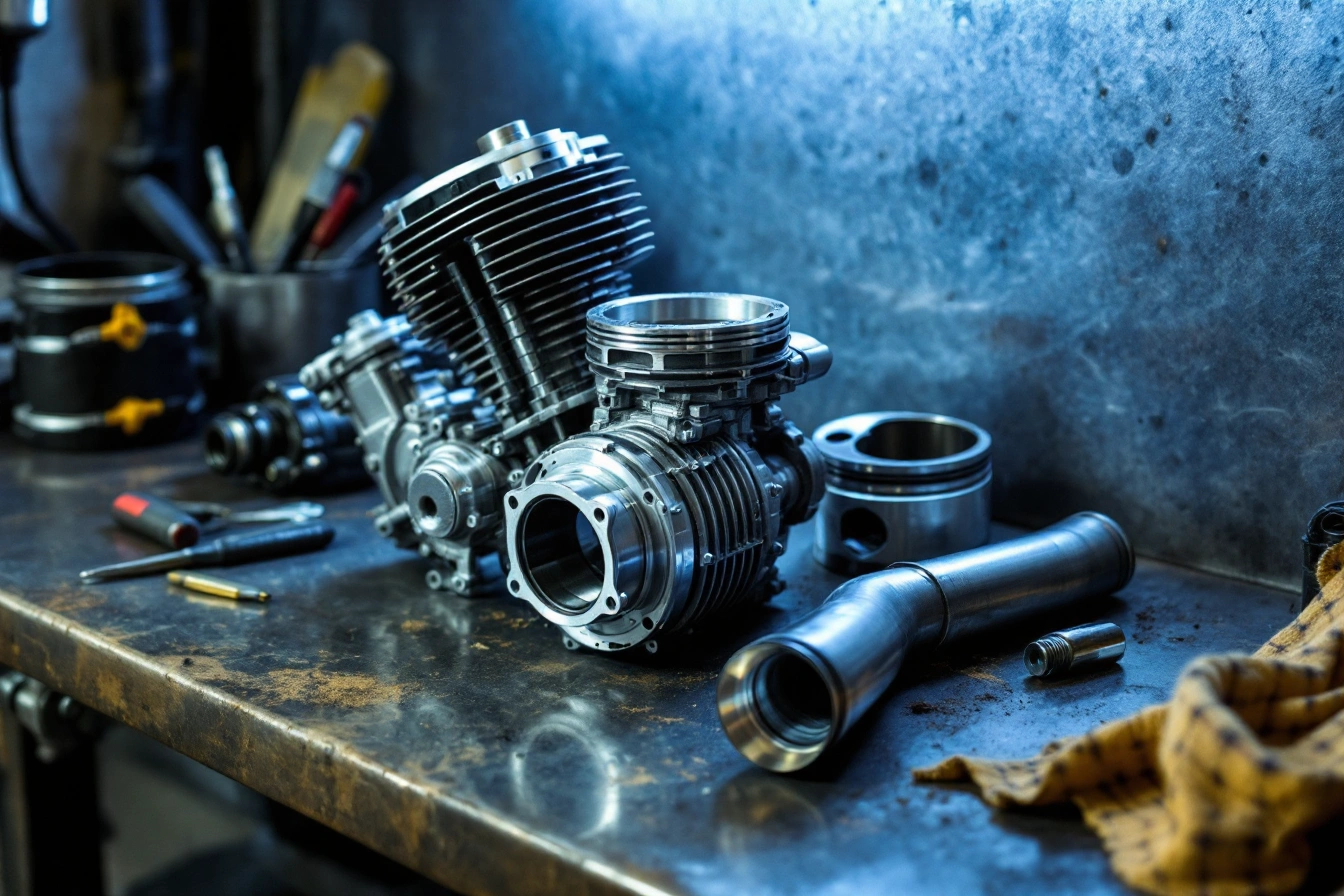
Two-strokes were supposed to disappear. They lost the motocross sales war to four-strokes, they struggle to meet modern emissions rules with a carburetor, and for years the big makers put their engineering money elsewhere. Yet the two-stroke is still here, still raced, and in the trail bike market it is growing again. Fuel injection is the reason the argument reopened.
This is a shorter, updated version of a long reader discussion that ran on this site. It keeps the question and drops the 2008-era predictions.
Why two-strokes faded
A two-stroke engine fires on every revolution of the crank. The piston moving down pushes the incoming fuel and air charge through ports in the cylinder, and the piston moving up compresses it before the plug lights it. There are no valves and no camshaft. That makes the engine light and compact, and cheap to build. It also makes a lot of power for its size.
The same design has a flaw. For a moment, the exhaust port and the transfer ports are open at the same time. Some of the fresh charge escapes straight into the exhaust before the piston closes the port. That short-circuiting wastes fuel and sends unburned hydrocarbons out of the tailpipe. A carbureted two-stroke also meters fuel and oil less precisely than a modern four-stroke's fuel injection.
Racing rules did the rest. When the AMA allowed bigger four-strokes to race against 250cc two-strokes, the four-stroke had a displacement advantage that no amount of two-stroke development could answer in the showroom. Yamaha raced the one-off factory YZM400F in AMA Supercross in 1997, and the production YZ400F was unveiled that June. The four-stroke era in motocross followed quickly, and buyers followed the race results. The big makers cut two-stroke development and put their money into four-stroke engines, fuel injection and electronics.
The result was a market where a two-stroke was cheap and light, and still fun, but also old-fashioned. Trail riders still bought them. Racers moved on. That is the world the old debate was written in.
Direct injection
Fuel injection changes the emissions problem at its source. Instead of mixing fuel in a carburetor and hoping most of it stays in the cylinder, an injected two-stroke delivers fuel at a point and time that reduce the amount that escapes into the exhaust.
There are two common approaches on dirt bikes. Transfer port injection puts the injectors in the transfer ports, so fuel arrives as the charge moves into the cylinder. Throttle body injection puts a single injector in the throttle body and uses the engine's sensors to time the spray. KTM and Husqvarna sell fuel-injected two-stroke enduro models, and their current lineups are the simplest place to see the technology in production rather than in a concept drawing. Snowmobiles and outboards went further with true direct injection into the cylinder years earlier, which is why a snowmobile engine is a useful reminder that the idea is proven.
Injection does several things at once. It cuts fuel consumption, reduces smoke and makes the engine run more cleanly at part throttle. It also removes the need to premix fuel and oil on some models, because the oil is metered separately. On others, the owner still mixes. Check the specific model before you assume.
The trade is complexity. A fuel-injected two-stroke has a fuel pump, sensors, an ECU and a battery or capacitor system. Diagnosing a running fault needs a scan tool or a dealer, not just a spark plug wrench. For a rider who does their own maintenance, that is a real change from the carbureted bikes many people grew up with.
Emissions rules
Emissions rules are written around the pollutants a two-stroke produces: hydrocarbons from unburned fuel, carbon monoxide and smoke. A carbureted two-stroke is at a disadvantage because the escaping charge is hard to control. Fuel injection, a catalytic converter and precise oil metering all help, but they add cost.
The rules that matter to a rider depend on where and how the bike is used. Closed-course competition is treated differently from a trail bike that needs registration, and a street-legal dual-sport faces the strictest tests. Some states and provinces allow off-road registration with an emissions label. Others do not. A bike that is legal in one place can be a paperwork problem in another.
That is why the two-stroke's future is not one story. On a motocross track, the emissions question is mostly about noise, fuel and local rules. On public land, it is about registration and whether the bike meets the standard in force. A fuel-injected trail two-stroke is far easier to sell into those markets than a carbureted one.
Do not assume that a newer two-stroke is automatically legal everywhere. Check the registration rules for the place you plan to ride, and check the bike's paperwork before you buy. This is also where a VIN check earns its keep on a used bike.
What riders think
The riders who still choose a two-stroke usually talk about weight and cost. A two-stroke is lighter than a comparable four-stroke, which matters in tight trees and when you pick the bike up. A top-end rebuild is simpler and cheaper than a four-stroke valve and cam job, and a rider who does their own work can do it at home.
The complaints are just as consistent. Four-strokes put power down more smoothly and lug better when a climb gets technical. A two-stroke wants to be on the pipe, and a rider who is tired or off the pace can feel the difference. Fuel range is shorter on some models, and the sound carries further.
There is also a generational split. Riders who grew up on carbureted two-strokes miss the simplicity. Riders who started on four-strokes often find a two-stroke tiring at first, then enjoy the lighter feel once they learn to carry speed. Neither group is wrong. The bike suits a riding style, and the style is learned.
What has changed is the choice. For a long time a new two-stroke trail bike was a niche product. Now several makers sell fuel-injected two-strokes built for enduro and trail riding, with electric start, lights and a broader power spread. That is a different bike from the motocross two-stroke of the 1990s, even if the basic engine layout is the same.
Noise is part of the same conversation. A two-stroke's exhaust note carries, and land access often depends on staying under a sound limit. A stock exhaust with a fresh packing and a correctly set power valve is quieter than a worn or modified system. Riders who want to keep trails open should treat noise as a maintenance item, not a style choice.
What to watch
Watch the trail and enduro market first. That is where fuel-injected two-strokes are selling in real numbers and where the makers have a reason to keep improving them. Motocross rules may change again, but the showroom is a better guide than a rumor.
Watch the parts and service picture too. A two-stroke that needs a dealer-only diagnostic tool is less attractive to a home mechanic. A model with a strong aftermarket and a simple fuel system will hold value better. Before you buy, price a top-end kit and check that pistons and gaskets are still available.
If you are buying used, treat a fuel-injected two-stroke like any other modern bike. Check the hours, the compression and the fault codes if you can. Ask when the top end was last done and who did it. A clean bike with receipts is worth more than a cheaper one with a story.
For the fuel side, our 2-stroke mix calculator handles the oil ratio so you can spend your attention on the ride. If you are still deciding between engine types, the two-stroke vs four-stroke guide lays out the trade in buyer terms.
Two-strokes did not die. They got more expensive, more complex and more specialized, and they found a market where light weight and low running costs still matter. The future is smaller than the optimists of 2008 predicted, but it is real.
Sources: KTM, Husqvarna Motorcycles, and Yamaha's account of the YZ400F, checked November 2026.