
2-Stroke Oil Mix Calculator
Mix two-stroke fuel at the right ratio: enter fuel and ratio to get oil in milliliters and ounces, with a printable chart for common ratios.
Oil to Add
Enter your fuel amount to calculate the oil.
2-Stroke Oil Mix Chart
To use the chart, multiply the oil amount by the gallons or liters of fuel you have. For another ratio, divide the fuel volume by the first number in the ratio, using the same units for both.
| Fuel : oil | US fl oz per US gallon | mL per liter |
|---|---|---|
| 16:1 | 8 | 62.5 |
| 20:1 | 6.4 | 50 |
| 24:1 | 5.33 | 41.67 |
| 25:1 | 5.12 | 40 |
| 30:1 | 4.27 | 33.33 |
| 32:1 | 4 | 31.25 |
| 40:1 | 3.2 | 25 |
| 50:1 | 2.56 | 20 |
| 60:1 | 2.13 | 16.67 |
| 80:1 | 1.6 | 12.5 |
| 100:1 | 1.28 | 10 |
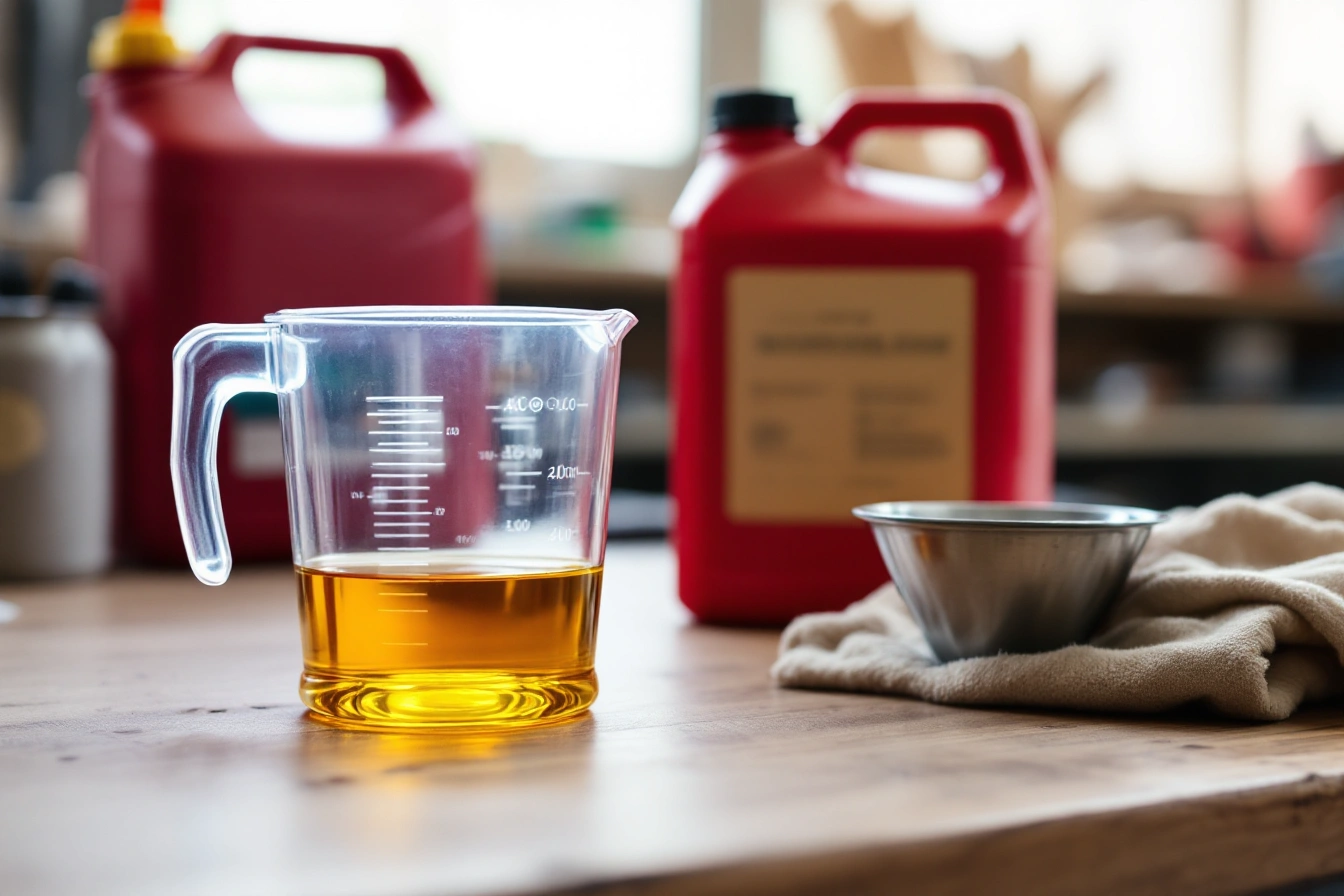
A two-stroke engine needs oil mixed into the fuel. Too little oil wears the piston and the bearings. Too much oil fouls the plug and makes smoke. The calculator above turns a fuel amount and a ratio into the oil to add.
The ratio is fuel to oil. A 40:1 mix means 40 parts fuel to 1 part oil. A 50:1 mix is leaner on oil. The right number comes from the owner's manual for your bike, not from a general rule.
The short answer: enter the fuel amount and the ratio, and add the oil the calculator shows in milliliters and US fluid ounces. At 40:1, one US gallon takes 3.2 fluid ounces. At 50:1, five liters take 100 milliliters.
Mix Chart
The chart in the tool shows common ratios at one US gallon and one liter. Use it to check the calculator or to mix a small batch by hand.
To read the chart, find your ratio on the left. The next column is the oil in US fluid ounces for one US gallon. The last column is the oil in milliliters for one liter.
For a larger batch, multiply the figure by the number of gallons or liters. For 2.5 gallons at 50:1, multiply 2.56 fluid ounces by 2.5 to get 6.4 fluid ounces.
2 Stroke Oil Mixing Calculator: How to Measure Oil
Use a measuring cup with milliliter marks or a ratio cup with fluid ounce marks. A kitchen spoon is not accurate enough for a small batch. A little too much oil is safer than too little, but the right amount is better.
Pour the oil into the fuel can first, then add gasoline. The moving fuel helps mix the oil. Shake the can before you fill the tank.
Do not rely on the oil injection system if your bike has one and it is working. If the system fails, the engine gets no oil. Many riders remove the system and mix at the pump. If you do that, use the ratio the maker specifies.
Ratio vs Premix
Premix means the oil is already in the fuel. A bike with an oil injection pump takes straight gasoline and meters the oil itself. The two systems are not interchangeable.
If a bike has an injection pump, do not add oil to the tank unless the manual says to. If the pump is removed, you must premix. Check the oil tank and the pump before you fuel a used two-stroke. Before you pay for a used two-stroke, run a VIN check motorcycle so the frame number matches the paperwork.
A used bike may have a removed pump and a capped oil tank. Ask the seller how they mixed it. A bike with no pump and no premix in the tank is a seized engine waiting to happen.
Mixing by the Tank
A fuel can is easier to mix than a tank. Fill the can with the amount of gasoline you plan to use, add the oil for that amount and shake it. Then fill the bike from the can.
If you mix in the tank, add the oil first and then the fuel. A half-full tank makes the math harder, because you do not know the exact volume. Guess wrong and the ratio is off.
Write the ratio on the can with a marker. Two cans with different mixes look the same. A 40:1 can in a 50:1 bike is richer than the engine expects, and the other way around is worse.
Keep a small measuring cup in the toolbox. A cup with milliliter marks costs little and removes the guesswork at the pump. A ratio cup with a sliding scale works too, as long as you set it for the right fuel volume.
Common Mixing Mistakes
The first mistake is guessing the fuel amount. A five-gallon can is not always full. Use the pump's own readout or a marked jug.
The second is using a ratio from a forum instead of the manual. Two engines that look alike can call for different mixes. The manual is the source for your bike.
The third is storing a mixed batch for months. Gasoline loses its lighter parts over time, and the oil can settle. Mix what you will burn, and start fresh for a new season.
The fourth is adding oil to a bike with a working injection pump. That makes the mix richer than the pump expects and can foul the plug. Check the pump before you add anything.
Print View
Print the chart and keep it with the fuel can. The print includes the ratio, the ounces per gallon and the milliliters per liter. It also keeps the formula line.
Write your bike's ratio on the printout. A 125 motocross bike and a trail bike may use different ratios, and a borrowed can is easy to mix wrong.
2 Stroke Oil Mixing Calculator Verdict
The 2 stroke oil mixing calculator takes the guesswork out of a fuel can. Enter the fuel and the ratio, then measure the oil in milliliters or ounces. Use the owner's manual ratio, mix only what you will burn and keep the chart with the can. A correct mix protects the engine for the price of a measuring cup.
Frequently Asked Questions
How much oil do I add to one gallon at 40:1?
One US gallon is 128 US fluid ounces. Divide 128 by 40 and you get 3.2 US fluid ounces, or about 94.6 milliliters. Use the ratio from your owner's manual, not a number from a forum.
What is 50:1 in milliliters per liter?
One liter is 1000 milliliters. Divide 1000 by 50 and you get 20 milliliters of oil per liter. For five liters at 50:1, you need 100 milliliters.
Can I use the same ratio for every two-stroke?
No. The owner's manual sets the ratio for each engine. A 40:1 bike and a 50:1 bike are not the same. Using too little oil can damage the engine, and too much can foul plugs and smoke.
Should I mix only what I will use?
Yes. Mixed fuel has a shorter storage life than straight gasoline. Mix what you will burn in a few weeks, and do not leave a batch in the tank for months. Follow the fuel maker's storage guidance.
Does the calculator work in liters and gallons?
It takes US gallons or liters and returns oil in US fluid ounces and milliliters. The chart shows both units for common ratios, so you can check the result by hand.