
2-Stroke vs 4-Stroke Dirt Bikes
Two-stroke or four-stroke dirt bike? See how the engines differ, what each costs to own and what riders still argue about, in plain terms for buyers.
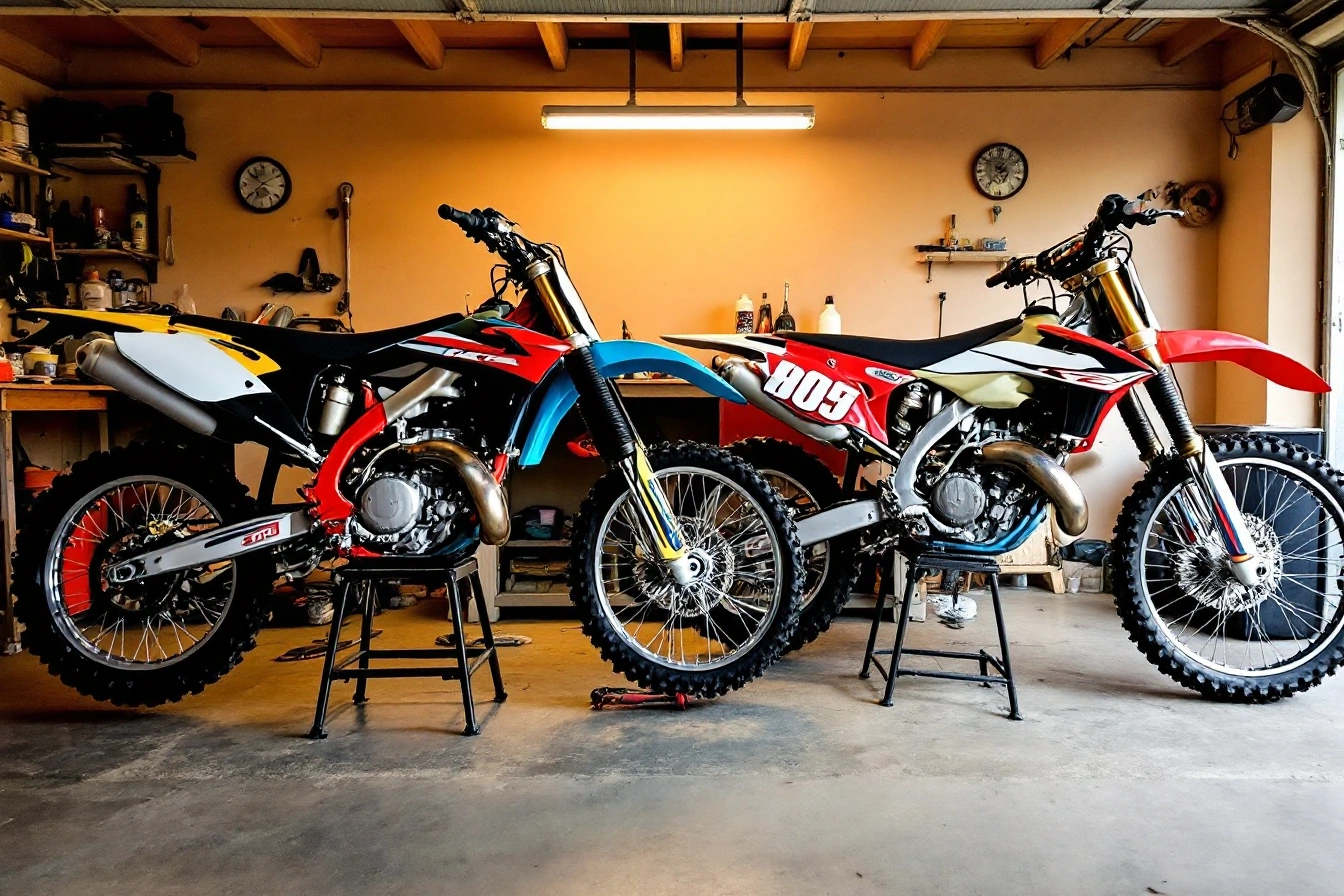
The two-stroke versus four-stroke argument used to fill forum threads for hundreds of pages. Most of those threads are now out of date. Four-strokes won the motocross showroom, two-strokes found a second life in enduro and trail riding, and fuel injection changed what a two-stroke can do about emissions. The question for a buyer is narrower than it was: which engine suits the riding you actually do, and what will it cost to keep running?
How the two engines work
A two-stroke engine fires on every revolution. The piston moving down pushes the fuel and air charge through ports, and the piston moving up compresses it before the plug lights it. There are no valves and no camshaft, so the engine is light and simple. It also makes a lot of power for its size.
A four-stroke engine fires on every second revolution. The piston makes four separate strokes: intake and compression, then combustion and exhaust. Valves in the cylinder head open and close to let the charge in and the burned gas out, and a camshaft times those valves.
The four-stroke keeps its oil in the crankcase and does not burn it with the fuel. The two-stroke usually mixes oil into the fuel or meters it separately, and some of that oil goes out the exhaust. That difference explains much of the maintenance and emissions story that follows.
The two layouts also need different amounts of space. A two-stroke's cylinder is fed through ports in the barrel, so the engine can be narrow and light. A four-stroke needs a head with valves, a camshaft and a timing chain, which adds height and weight. That is why a two-stroke of the same displacement usually feels smaller and lighter in the frame.
Power and ride feel
A two-stroke makes power in a narrow, strong band. Below the band it can feel flat, then it hits hard and wants to be shifted. A skilled rider uses the clutch to keep the engine in that band. A tired rider gets punished when the revs drop in a corner or on a climb.
A four-stroke makes power earlier and more evenly. It lugs down low without stalling, puts power to the ground smoothly and feels easier to ride fast for a rider who is still learning. The trade is weight and engine braking. A four-stroke can feel heavier and more planted, and some riders never get used to the engine braking on a loose corner entry.
On a motocross track the four-stroke is the easier bike to ride at pace. In tight trees and on technical trails, a light two-stroke can be less tiring to pick up and easier to place. Sand suits a two-stroke's ability to spin the rear wheel and keep the front light.
Cost to buy and own
Used prices depend on the model and condition, and on the hours. Location matters too. A two-stroke is usually cheaper to buy for the same age and condition, and there are fewer expensive parts in the engine. A four-stroke holds value well in motocross, but a worn one can cost more to bring back.
Running costs follow the same pattern. A two-stroke needs pistons and rings, plus gaskets and oil, and the work is simple enough for a home mechanic. A four-stroke needs oil and filter changes, valve checks and, eventually, valve work and seat work. Those jobs need more tools and more time, and a shop bill reflects that.
Do not compare a cheap two-stroke with a clean four-stroke and call it a fair fight. Condition matters more than engine type at the used end of the market. A well-maintained bike of either type is the better buy.
What a year of ownership looks like
Budget for the consumables first. Both engines need tires, chains, sprockets, brake pads, air filters and oil. A two-stroke adds premix oil and more frequent pistons. A four-stroke adds oil filters and valve checks, and the valve work is the expensive part.
The surprise costs are usually accident damage and neglect. A dropped bike needs levers, a shifter, a footpeg or a radiator guard. A bike that sat outside needs a battery, tires and a carburetor or injector clean. Those costs land on either engine type.
A sensible used buyer puts aside a repair fund before the first ride. The size of the fund depends on the bike, but a bike with no history will need more than a bike with receipts.
The resale question
A clean four-stroke is easier to sell in a motocross market. A two-stroke sells quickly to a rider who wants a light trail bike or a cheap race bike. The gap in resale is smaller than the gap in purchase price, which is one reason a used two-stroke can be the better financial choice.
Modifications can hurt resale. A heavily modified engine, a cut frame or a non-standard swingarm narrows the market. Keep the stock parts and keep the receipts.
Maintenance and rebuilds
A two-stroke top end is a piston, ring, pin, gasket and a few seals. A rider who is careful can do it in a garage with basic tools. The bottom end lasts longer but is still simpler than a four-stroke's.
A four-stroke top end involves the camshaft, valves, springs and buckets, or shims and the timing chain. Checking valve clearance is routine, and a valve that closes up can stop the engine or damage the head. A rebuild costs more because there are more parts and more precision work.
Both engines reward clean oil and a clean air filter. A four-stroke is less tolerant of dirty oil because the same oil lubricates the engine, clutch and gearbox. A two-stroke is less tolerant of a lean mixture or a worn piston, which can seize quickly.
What riders say now
Riders who choose a two-stroke talk about weight and cost, and the fun of the powerband. Riders who choose a four-stroke talk about traction, easy speed and resale. Both groups are describing real differences, not just brand loyalty.
The newer argument is about fuel injection. A fuel-injected two-stroke starts easily, runs cleaner and uses less fuel than a carbureted one, but it adds sensors, a pump and an ECU. A rider who likes to fix everything at home may prefer the older carbureted bike. A rider who wants a modern trail bike may prefer the injected one.
There is no single winner. A rider who races motocross on a tight budget can still be fast on a two-stroke. A trail rider who wants to lug up a rocky climb may be happier on a four-stroke. The right answer depends on the riding, not the label.
The argument has also become less ideological. A rider who owned a carbureted two-stroke in the 1990s may be surprised by a modern injected one, and a rider who only knows four-strokes may find a two-stroke lighter and more fun than expected. Test ride both if you can. A short ride on a friend's bike tells you more than a hundred forum posts.
What the argument gets wrong
The old threads often assumed one engine type would disappear. That did not happen. The market split instead: four-strokes dominate motocross, two-strokes survive in enduro and trail riding, and fuel injection gave the two-stroke a modern reason to exist.
The other mistake was treating the engine as the whole bike. Suspension, brakes and ergonomics, plus tires matter as much as the powerplant. A well-set-up two-stroke will be easier to ride than a badly set-up four-stroke, and the reverse is also true.
Buy the whole bike, not the engine badge. That is the short version of a very long argument.
One last thing to understand is displacement. A two-stroke makes roughly twice the power strokes of a four-stroke of the same size, which is why racing classes gave four-strokes extra capacity. That rule is also why a used four-stroke can feel stronger than its engine size suggests. Compare the bikes by how they ride, not by the number on the side panel.
Where the mix calculator fits
If you go two-stroke, the oil ratio is a maintenance item you cannot skip. Too little oil wears the engine; too much fouls plugs and builds carbon. Our 2-stroke mix calculator converts the ratio you want into oil volume for the fuel you have, so you are not doing arithmetic at the pump.
Whatever you buy, check the VIN and the paperwork before money changes hands. A VIN check is the quickest way to confirm the bike is what the seller says it is.
Sources: Honda Powersports and Yamaha Motorsports model information, checked November 2026.