
Motorcycle VIN Year Chart
We may earn a commission from some links on this page.
Read the 10th VIN character to find a motorcycle's model year. The full 1980-2039 code chart, plus how positions 1-9 and 11-17 fit together.
| Year position | Position 10 of a 17-character VIN. |
|---|---|
| Cycle | The letters repeat every 30 years. |
| Letters skipped | I, O, Q, U and Z are not used in the year code. |
| Pre-1981 bikes | Shorter frame numbers that do not follow this chart. |
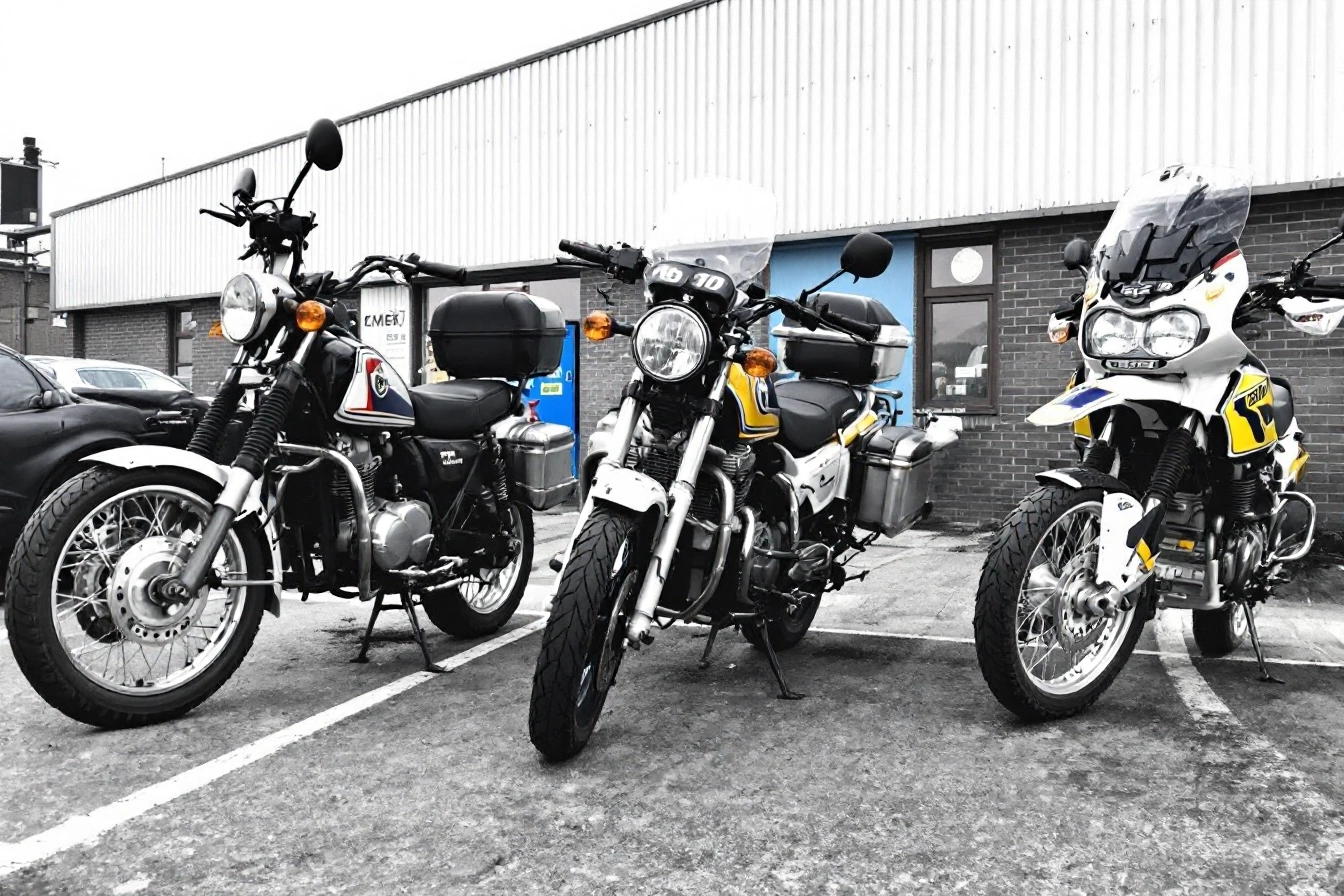
A motorcycle year by VIN lookup comes down to one character: position 10. Almost every 17-character VIN built for the US market carries the model-year code there. The code is a letter or a digit, and the full set repeats on a 30-year cycle, so the chart below runs from 1980 to 2039.
Find position 10 in the VIN, then read the code in the chart. The code repeats every 30 years, so a letter alone cannot separate 1991 from 2021. Use the model, the equipment and the paperwork to settle the decade.
Which Digit Sets the Motorcycle Year by VIN
Count the characters from the left. Position 1 is the first character and position 10 is the tenth. On a 17-character VIN, position 10 is the model-year code. Read that one character against the chart, and you have the model year the maker assigned.
The rule comes from 49 CFR 565.15, the federal standard for VIN content. The same section sets the check digit at position 9 and the plant code at position 11. The year code is the only position that maps to a calendar year in a fixed table. Positions 4 to 8 are maker-specific, so they cannot be read without the maker's own key.
A model year is not always the same as the build date. A bike can leave the factory in one calendar year and be sold as the next model year. The VIN code follows the model year, which is what the title and the registration usually show.
That difference matters when a seller says the bike is a certain year. A machine built in late 2025 can be sold as a 2026 model, and its position 10 code will be T, not S. The title should carry the model year the maker assigned, not the calendar year the frame was welded.
A plate can carry a barcode or other print beside the VIN, but the check digit is part of the VIN itself, at position 9. Count only the 17 characters of the VIN. If a plate prints the VIN in two rows, join the rows in order before you count positions.
A VIN can also be stamped in more than one place. The plate and the frame stamp should show the same 17 characters. If one is worn and the other is clear, use the clear one and check it against the title. If the two disagree, stop. Find out why before you read the year.
The year chart is only as good as the character you feed it. Read position 10 twice, once from the left and once from the right, to catch a transposed pair. A single wrong character can turn a 2016 bike into a 1986 bike in the chart, and that error can follow the bike into a listing.
1980-2039 Year Code Chart
The table groups the codes by the 30-year repeat. The left year column covers 1980 to 2009, and the right year column covers 2010 to 2039. A code in the same row means the same position-10 character in two different decades.
| Code | 1980 to 2009 | 2010 to 2039 |
|---|---|---|
| A | 1980 | 2010 |
| B | 1981 | 2011 |
| C | 1982 | 2012 |
| D | 1983 | 2013 |
| E | 1984 | 2014 |
| F | 1985 | 2015 |
| G | 1986 | 2016 |
| H | 1987 | 2017 |
| J | 1988 | 2018 |
| K | 1989 | 2019 |
| L | 1990 | 2020 |
| M | 1991 | 2021 |
| N | 1992 | 2022 |
| P | 1993 | 2023 |
| R | 1994 | 2024 |
| S | 1995 | 2025 |
| T | 1996 | 2026 |
| V | 1997 | 2027 |
| W | 1998 | 2028 |
| X | 1999 | 2029 |
| Y | 2000 | 2030 |
| 1 | 2001 | 2031 |
| 2 | 2002 | 2032 |
| 3 | 2003 | 2033 |
| 4 | 2004 | 2034 |
| 5 | 2005 | 2035 |
| 6 | 2006 | 2036 |
| 7 | 2007 | 2037 |
| 8 | 2008 | 2038 |
| 9 | 2009 | 2039 |
Scroll for more →
Source: 49 CFR 565.15, Table VI and Table VII. Checked November 2026.
Why Letters Repeat Every 30 Years
The year code uses 21 letters plus the digits 1 through 9. It skips I, O, Q, U and Z, so the full set is 30 characters before it repeats.
That repeat is the catch. Position 10 alone cannot tell a 1991 from a 2021. Both use M. It cannot tell a 1995 from a 2025, because both use S. A seller who claims a year from the tenth digit alone has only half the answer.
You can usually settle the decade from the rest of the bike. Positions 4 to 8 carry maker-specific model and engine codes, and position 11 names the plant. The bike's styling, its engine, its emissions label and its paperwork all help. If the bike looks like a 2021 model and the VIN carries M, the later year is the likely one.
Take the M code as an example. A 1991 bike and a 2021 bike can both show M in position 10. The 1991 machine will have older bodywork, a different engine family and a paper title that was issued decades ago. The 2021 machine will have a recent title, a modern emissions label and parts that match a recent model.
The letter S shows the same problem. It can mean 1995 or 2025. A 1995 bike with an S code is a vintage machine, while a 2025 bike with the same letter is nearly new. The frame, the engine and the paperwork separate the two cases.
The digits 1 through 9 cover 2001 to 2009 and then repeat for 2031 to 2039. A 7 in position 10 can mean a 2007 or a 2037 bike. Since a 2037 bike does not exist yet, the earlier decade is the only real answer today. The table is written for the whole 30-year cycle so it stays useful as the later years arrive.
Reading Positions 1-9 and 11-17
Position 10 is the answer people want, but it only makes sense inside the rest of the VIN. Positions 1 to 3 are the world manufacturer identifier. The first character names the region, and the next two name the maker. A Japanese bike usually starts with J, and a US-built bike often starts with 1 or 5.
Positions 4 to 8 are the maker's own model and equipment codes. There is no universal table for them, because each maker uses the space its own way. Position 9 is the check digit, which is a math check on the other characters. It catches typos and some cloned VINs, but it does not encode the year.
Position 11 is the plant code. Positions 12 to 17 are the production sequence, which tells you where the bike fell in the build run. None of these positions repeat on a 30-year cycle, so they help separate two bikes that share a year code.
The plant code is easy to overlook, and it is useful. A bike built in one country may carry a plant letter that no other plant uses for that model. If a frame has been replaced, the plant code can expose a mismatch that the year code alone would hide.
The check digit at position 9 is a quiet helper. It catches a single mistyped character, which is common when a VIN is copied from a dirty stamp. If a decoder says the check digit fails, do not trust the year it returns. Read the stamp again and compare it with the title.
The world manufacturer identifier at positions 1 to 3 is fixed by the maker and the region. If the first character points to one country and the seller says the bike was built in another, ask for the paperwork. Imports can legitimately move between countries, but the VIN keeps the original build details.
Put the VIN In to Confirm
A chart gives you the year, and a decode confirms the rest. Type the full 17-character VIN into the box and read the year, make and model it returns. If the decode disagrees with the seller, ask which document the seller is using and check the frame stamp yourself.
Use the chart as a cross-check, not a replacement for the paperwork. The title and the registration should show the same year the VIN returns. A mismatch is a question to settle before money changes hands.
A dirt bike can be trickier than a road bike here. Many off-road bikes were never titled, so there is no registration year to compare. The frame stamp and a decode are then the main evidence. Ask the seller for the original manual, the dealer paperwork or any race entry that names the year.
Do not use the engine number to date the bike. The engine number follows its own sequence and can belong to a different model year after a swap. The year code at position 10 belongs to the frame VIN, and that is the number the title uses.
If the VIN returns a year that is later than the bike's styling, check whether the frame has been replaced. A replaced frame can carry a newer VIN, and that changes the identity of the machine. Ask for the repair record and the paperwork that goes with the new frame.
Verdict: Motorcycle Year by VIN
To get the motorcycle year by VIN, read position 10 and use the chart to turn that character into a year. Remember the 30-year repeat, so a letter can point to two decades. Confirm the decade with the model, the plant code and the paperwork, and run the full VIN when you want the year, make and model in one step.
Frequently Asked Questions
Which VIN digit tells the year?
Position 10. On a 17-character VIN, count from the left and read the tenth character against the year chart.
Why can M mean 1991 or 2021?
The year code repeats every 30 years. Position 10 alone cannot tell the decades apart, so use the model, the features and the paperwork.
My VIN has only 11 characters. Does the chart work?
No. Short frame numbers belong to older bikes and imports that predate the 17-character rule. Use the pre-1981 guide instead.
Is the model year the same as the build year?
Not always. A bike can be built in one calendar year and sold as the next model year, so the code follows the model year.