
Dirt Bike Riding Tips
Dirt bike riding tips for cornering, jumping, wheelies and body position, written for riders moving up from a first bike and wanting real progress.
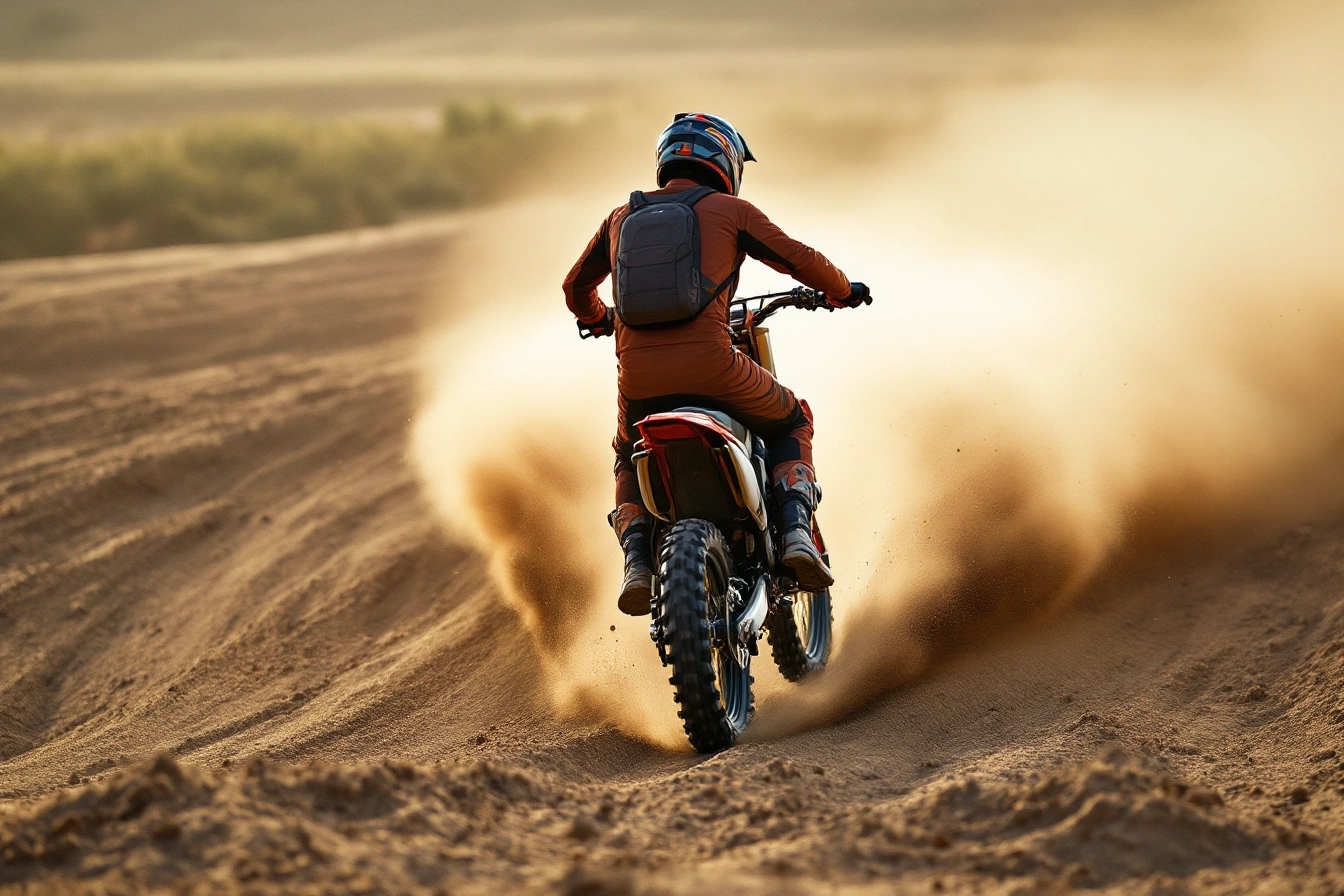
Speed comes from technique, not from holding the throttle open longer. A rider who stands in the right place, looks through the corner and stays loose will be quicker and safer than one who fights the bike. These tips are for a rider moving up from a first bike, or for anyone who wants a practice plan instead of another afternoon of laps.
Body position
Stand on the pegs with the balls of your feet on the peg, not the arches. Grip the bike with your knees near the bottom of the tank. Keep your back slightly arched, your elbows up and your head over the bars.
Standing lowers your weight to the pegs and lets the bike move under you. It is tiring at first, so build time in the attack position in short blocks. Sit for smooth, flat corners where you need to load the rear tire, then stand again as the track gets rough.
Keep one or two fingers on the clutch and front brake. Covering the levers shortens the time between seeing a problem and doing something about it. Relax your grip. Tight hands transmit every bump into your arms and make arm pump worse.
Cornering
Look at the exit before you turn. Your head and shoulders should point where you want to go, and your eyes should be two or three bike lengths ahead of the front wheel. If you look at the rut you want to avoid, you will ride into it.
Set your speed before the turn, then get back on the gas as early as the traction allows. Sit forward on the tank for a flat corner, put weight on the outside peg and lean the bike more than your body. In a rut, stay neutral and let the bike follow the groove.
Brake in a straight line and release the front brake as you lean. Trail braking into a loose corner is a fast way to lose the front. Practice one corner at a time on a track you know. Repeat it until the entry speed and the exit line feel the same every lap.
Jumping
Approach a jump in the attack position and keep a steady throttle. Stand up, look at the landing and let the bike move under you. Do not sit down at the last moment, and do not chop the throttle on the face.
A small amount of throttle on takeoff keeps the front end up. Too much and the bike noses up; too little and it dives. Learn one jump at a time and start on a tabletop with a flat landing before you try a double.
If you come up short, stay on the gas and absorb the hit with your legs. If the front end drops, move your weight back. If the bike kicks sideways in the air, correct with your hips and feet rather than the bars. Practice on a small jump until the takeoff and landing are boring.
Wheelies and stoppies
A wheelie is clutch, throttle and body position. Start in first or second gear at walking pace, pull the clutch, add a little throttle, drop the clutch and pull back on the bars as you sit back. Cover the rear brake with your right foot. The rear brake is what saves you from looping out.
Once the front is up, keep the throttle steady and use the rear brake to control the height. Do not chase a long wheelie before you can hold a short one. A clean wheelie that ends under control is worth more than a long one that ends in a crash.
A stoppie needs front brake control and a firm surface. Roll forward at a slow speed, apply the front brake progressively and shift your weight forward as the rear lifts. Keep your arms bent and be ready to release the brake. Practice on a clean, flat area away from traffic.
Practice plan
Ride with a purpose for part of every session. Pick one skill, spend 15 minutes on it, then ride normally and come back to it later. Short, focused blocks beat an all-day session where you repeat the same mistakes.
A simple plan:
- Warm up with two easy laps and a few standing drills.
- Spend 15 minutes on cornering entry, then 15 minutes on corner exit.
- Work on one jump or one obstacle for 10 minutes.
- Finish with a short, smooth lap and note what felt different.
Video yourself or ask a better rider to watch one section. Feedback on body position is hard to get from feel alone. Keep a note of the changes you make so you can repeat them. A short phone clip from the side of a corner shows more than a full lap filmed from the bars.
Before a used bike becomes your practice bike, go through the used motorcycle checklist and check the suspension settings. A bike with worn tires or a bad setup will make every drill harder. Our suspension setup guide explains the clickers and sag in plain terms.
Progress is slow and then sudden. Keep the sessions short, keep notes, and do not measure a good day by speed alone. Smooth is the goal, and speed follows.
One last habit: finish every session with two easy laps. A smooth cool-down lap catches the bad habit you picked up when you got tired, and it ends the day on a good note.